From Archive to Repertory: Awakening Tomorrow’s Warriors’ Living Legacy
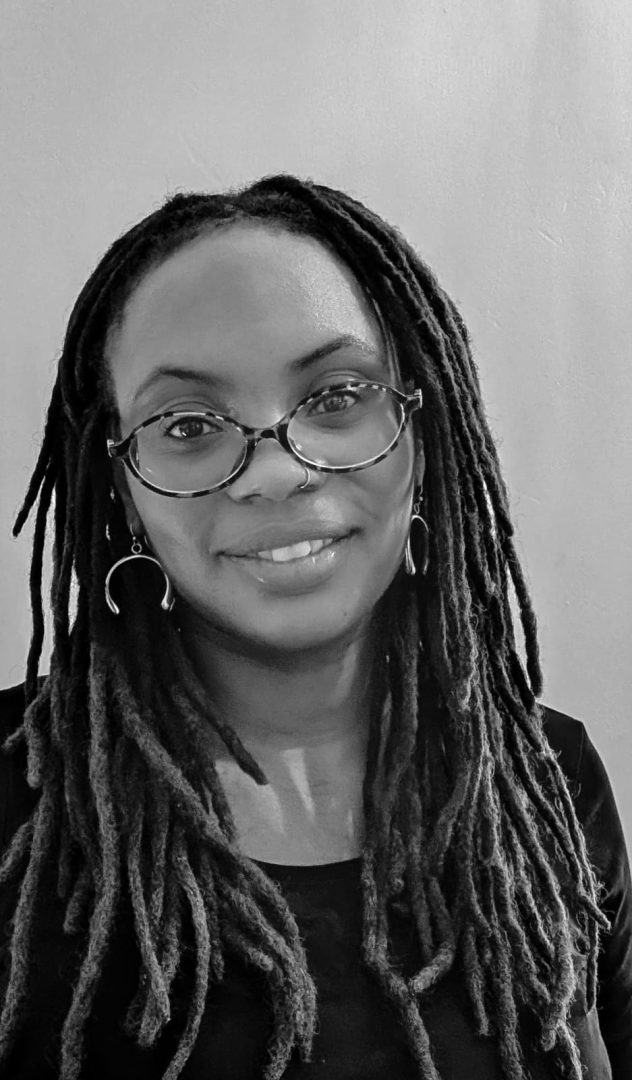
Sula is a PhD candidate at Goldsmiths, University of London working at the intersection of performance, film studies, archival studies, and Black feminist theory. She has developed archives at the Royal Court Theatre and Peckham Platform, each time building innovative infrastructure for holding and activating cultural memory.
Her work is driven by a central question: how do Black creative materials circulate? Not how they are preserved, but how they move, how they speak across time, how cultural memory remains embedded and alive within them. This interest is rooted in call and response, the foundational Black cultural practice of remembering and reproducing culture through dialogue and echo.
“I grew up between two worlds that both depended on antiphonal structure: the Black church and the theatre. My mother was a reverend who ran a theatre company, and whether sermon, story, musical beat, or intervention theatre, call and response was the grammar of communication and community.
From this, I’ve developed critical antiphony, a practice of listening for the calls embedded within materials and designing systems so they can respond to each other across time and context. I’ve tested this as a film programmer, building the Royal Court’s Living Archive, and creating community-focused theatre through Spirit First Creatives. Each iteration sharpens the same inquiry: what systems allow creative work to remain in motion rather than becoming fixed?
Now, with Tomorrow’s Warriors, I’m building something else entirely. Not an archive in a traditional sense, but what I call the repertory: infrastructure for keeping materials in active circulation, available for repeated activation and creative response.”
The Host and Project
I have been working with Tomorrow’s Warriors to build their first comprehensive repertory: infrastructure that can hold over thirty years of materials whilst keeping them alive. Though I am cataloguing a massive collection — photographs, audio recordings, programmes, correspondence — I am not archiving. I am building a repertory.
Inspired by repertory theatre, where works are kept alive through seasonal rotation and ensemble rehearsal, a repertory is a system where materials remain in active circulation. Not preserved as documentation of what happened, but rather held as resources for what might happen next. Works rest, then return. One recording activates another. A photograph from 1998 calls to a performance happening now. Materials become springboards for new creative work, for fresh responses, for future making.
The challenge matters because of who Tomorrow’s Warriors (TW) are as a diverse, multigenerational organisation and charity. Founded in 1991, TW has been one of the most significant forces in Black British jazz over the past three decades: a crucible for developing young musicians, particularly Black British artists who have reshaped the UK jazz scene and beyond. Their model of intergenerational mentorship, ensemble learning, and improvisational practice has been foundational to the current flourishing of Black British jazz.
How do you create a system for an organisation built on live music, improvisation, and intergenerational transmission — art forms that resist capture? What story does this collection tell? More crucially, how do these materials talk to each other? How do different timeframes, artists, and performances call through time to one another?
The project connects TW’s legacy to wider conversations about Black British cultural heritage whilst proving that cultural materials can function differently: collaboratively, responsively, generatively. It is infrastructure that ensures these materials remain vital resources for current and future musicians, community members, researchers, and creative practitioners.
For an organisation that has been so pivotal in shaping the landscape of Black British jazz, this repertory is about claiming authority and ensuring their story continues to unfold.
The Journey So Far
I’ve been working with thirty years of Tomorrow’s Warriors history, and the density of it has been extraordinary. The scope of their impact on Black British jazz, the way creativity moves through this organisation across generations and continents, the sheer volume of relationships and collaborations mapped across these materials — it demanded a different kind of attention.
I’m working with an organisation at a particular moment of growth and legacy-building. As Stuart Hall observed, constituting an archive represents “the beginning of a new stage of self-consciousness, of self-reflexivity in an artistic movement”. There’s something both necessary and precarious about this threshold. TW is moving from spontaneous creation into deliberate memory-making, and my task has been to build infrastructure that honours both impulses without collapsing one into the other.
The shift from archive to repertory happened through being in the company of Tomorrow’s Warriors’ practice, by witnessing how the organisation actually works. TW acts repertorially: works rest, then return in different contexts with different ensembles. And the materials reflect this.
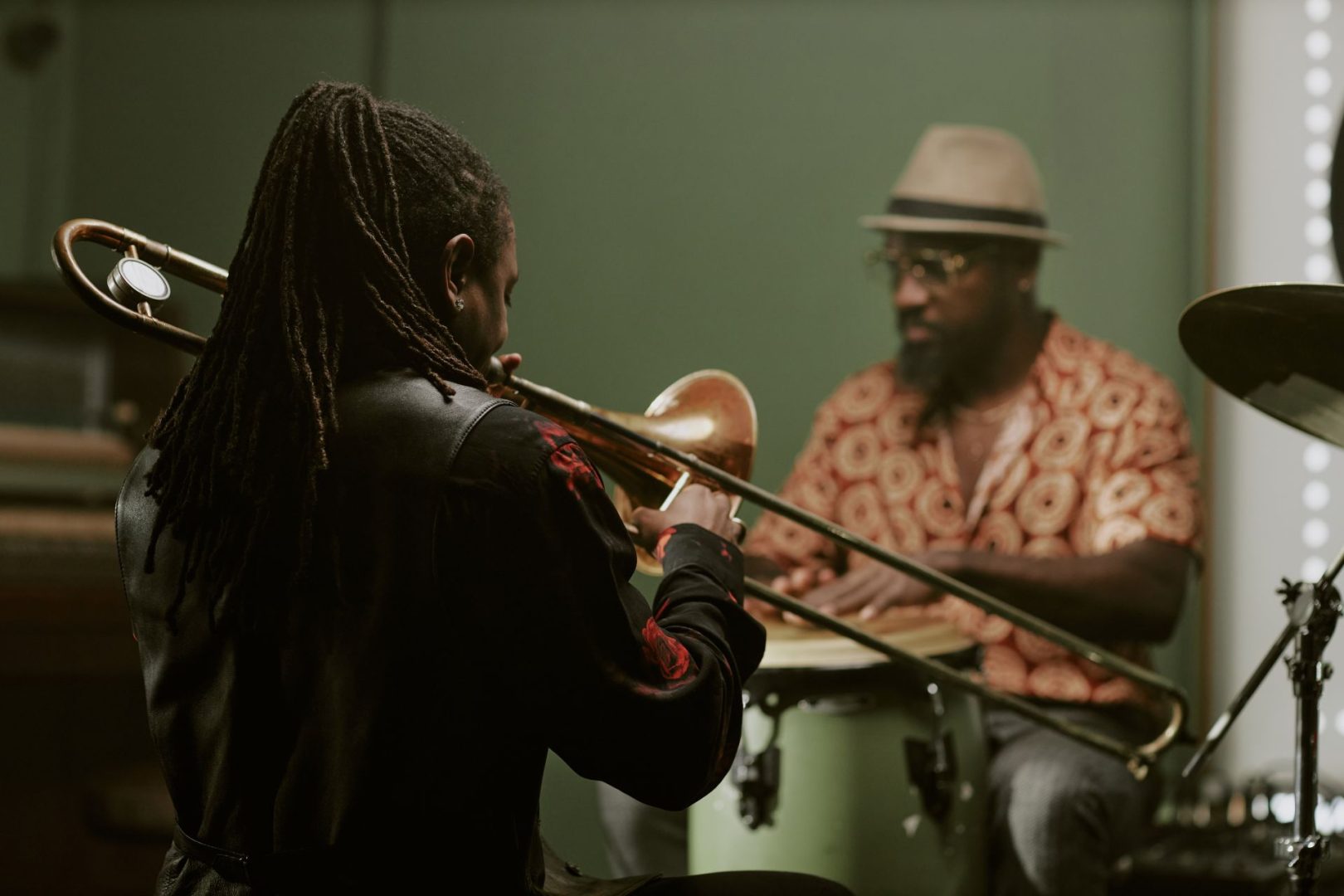
The process of cataloguing has revealed photographs that echo performances decades apart, recordings where you can hear one artist calling forward to another’s future work, programmes that map entire ecosystems of collaboration.
This has been fertile ground to further develop and test my practice of critical antiphony. Call and response — the foundational practice where one voice calls and another answers, where meaning emerges through dialogue rather than isolation — is the way in which I have been developing the cataloguing systems.
Using critical antiphony, I’m developing metadata that creates relation rather than simply describing objects: cataloguing systems that understand memory as active practice rather than static record.
The real challenge has been resisting the gravitational pull of conventional archival thinking at every turn. I have to keep listening for the calls and responses embedded in the materials, keep interrogating my own impulse to fall back into archival logic.
What I’m building now are the first protocols in what I hope will be many chains of call and response: materials arranged so they can speak to and through one another, infrastructure that keeps works in a state of readiness, available for artists and communities to call upon, reinterpret, and perform again.
I envision this repertory as a base for an entirely new form of creation for Tomorrow’s Warriors. Jazz is already an archival practice, built on citation, revision, and standards performed again and again across generations, and I hope this repertory becomes another platform for TW to engage with that living archive.
But more than this: I want Tomorrow’s Warriors to claim their authority as the pre-eminent home of Black British jazz — arguably British jazz, full stop. I want this collection to state that claim definitively.
Through public sessions, artists and practitioners will engage with materials to create new work — music, writing, visual art — that folds back into the repertory. Not documenting legacy, but actively participating in its ongoing creation. Proving that these materials can remain sites of artistic possibility, connecting past achievements to future innovations.
Hopes and Plans for the Future
For myself, I want to continue testing and developing both critical antiphony and the repertory model across different Black artistic collections and institutions, across different scales and practices.
But beyond strictly work and academia, this fellowship has opened new creative possibilities. I came to the programme with methodologies already in formation, rooted in call and response as dialogue, as antiphonal logic.
What StoryArcs has offered me is a way to think through call and response not only as a sonic pattern, but as fundamental narrative architecture. Engaging with the building blocks of story — point of view, metaphor, character, theme, setting — has rekindled a desire to work creatively, not just institutionally.
Story Skills In Action
My practice draws on all four story skill domains through critical antiphony and Black feminist epistemology.
I generate new narratives by listening for the calls embedded in materials, then building metadata and cataloguing systems that allow those materials to respond to each other across time and context. This transforms raw materials into meaningful stories through relation rather than chronology (story generation).
The values driving this work are embedded in every decision I make: intergenerational care, cultural justice, generous borrowing, and circulation over extraction. These aren’t abstract principles but structural choices about how materials are held and who gets to use them (story values).
The repertory model itself functions as an operational narrative. It’s infrastructure that guides collective action, showing TW and future users how to keep materials active and available rather than locked away (operational narrative).
Crucially, this work amplifies marginalised voices in Black British jazz history through systems that resist extractive archival logic. It’s not just about representing these voices, but creating infrastructure that centres them and keeps their creative work in circulation (narrative representation).
Meet more Story Fellows:
- Read about Panya Banjoko’s use of archive in her project with Nottingham City of Literature.
- Read about Kate Stonehill‘s London based investigating audio-visual technology and storytelling with Sonic Screen Lab.